Exhibit 1: Reproduction Changes Everything
Before cameras, if you wanted to see a painting, you had to go where it was. Now any painting can show up on your phone, t-shirt, or TV. Does this kill what made it special, or free it?
We see things before we can name them. Sight establishes where we are in the world and we use words to explain what we see. But words can never undo the fact that we're surrounded by the visible world.
The way we see art gets filtered through assumptions we've learned about abstract concepts like "beauty" and "genius". These assumptions are outdated and instead of clarifying what paintings mean, they mystify them.
What the Camera Did
Paintings used to be inseparable from where they were kept and could only exist in one spot at a time. That uniqueness was part of what it meant.
Once cameras could copy paintings, that uniqueness died. The meaning becomes multiplied and fractured as it enters a million other houses at the same time, each one giving it a different context.
Market Value Replaces Meaning
Nowadays, the original's uniqueness comes from being the first copy but what used to matter was the image itself. With that in mind, how do we measure that realness? By rarity/price. A painting becomes valuable because it's scarce and its market price gets dressed up as spiritual worth.
The National Gallery's Leonardo cartoon wasn't famous until someone offered $2.5 million for it and now it sits alone in its own room behind glass. Essentially, it became impressive because of what it costs, not because of what it depicts.
Words Change What You See
When you put words next to an image, they change it. The image stops being itself and starts illustrating whatever the words say. The painting gets quoted to back up someone else's point.
An image's meaning shifts based on what's next to it or what comes after it. Reproductions compete with all the other images and information floods past us constantly.
How Reproduction Changes Meaning
Look through these examples. Notice how context, cropping, and framing change what you see.
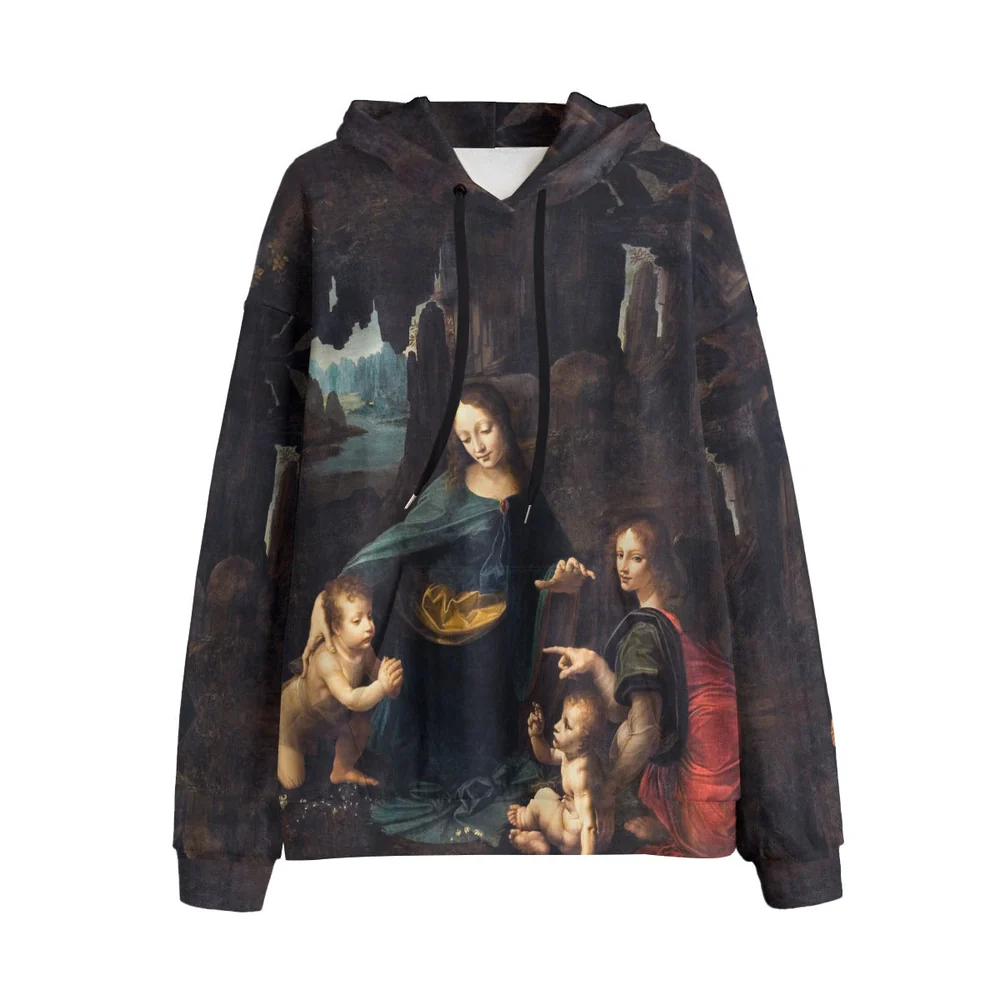
Virgin of the Rocks printed on a hoodie. Does it still feel important?
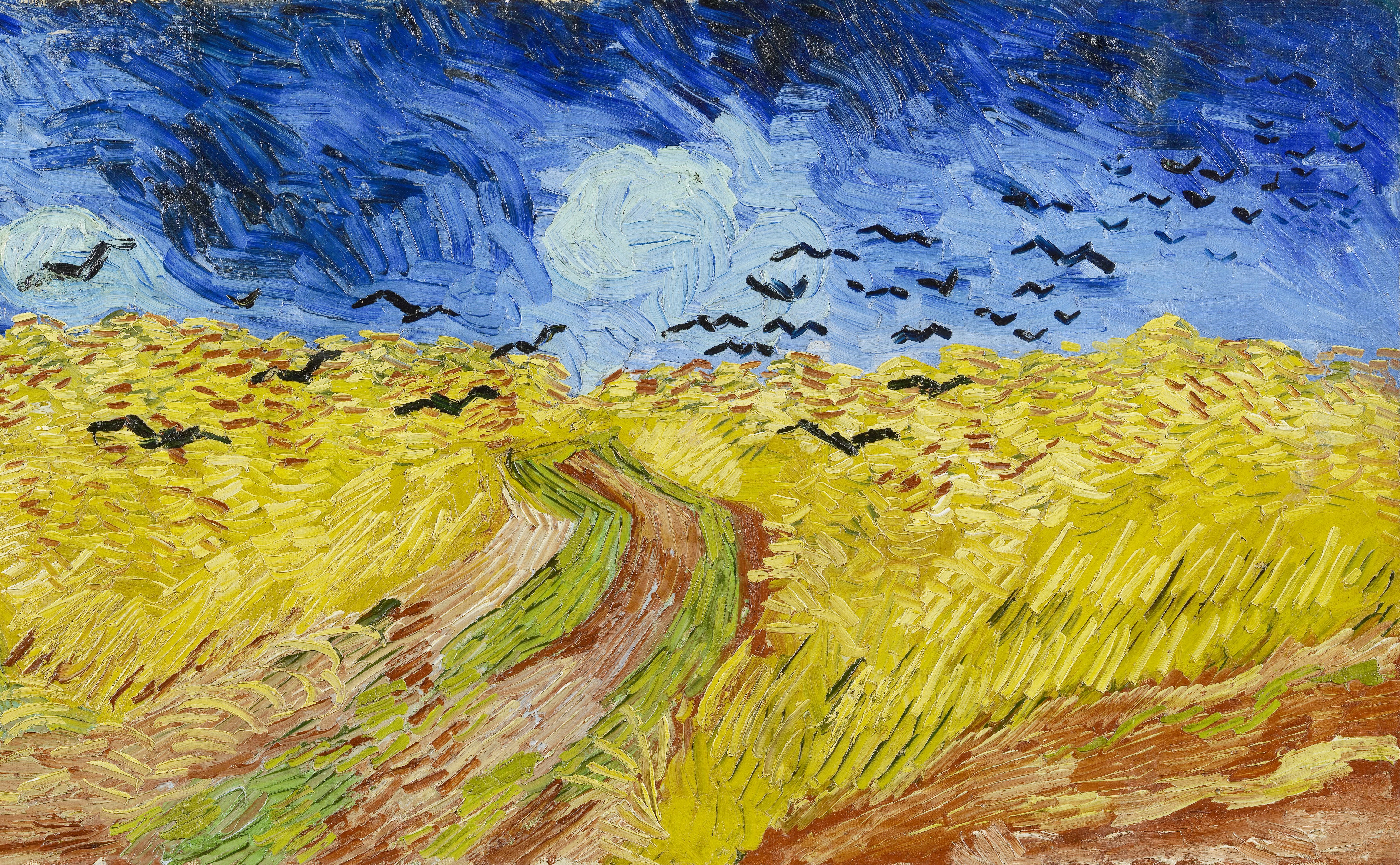
A wheatfield with some birds. That's what you see.
Now, a different caption: "Van Gogh's final work before committing suicide." Now what do you see?
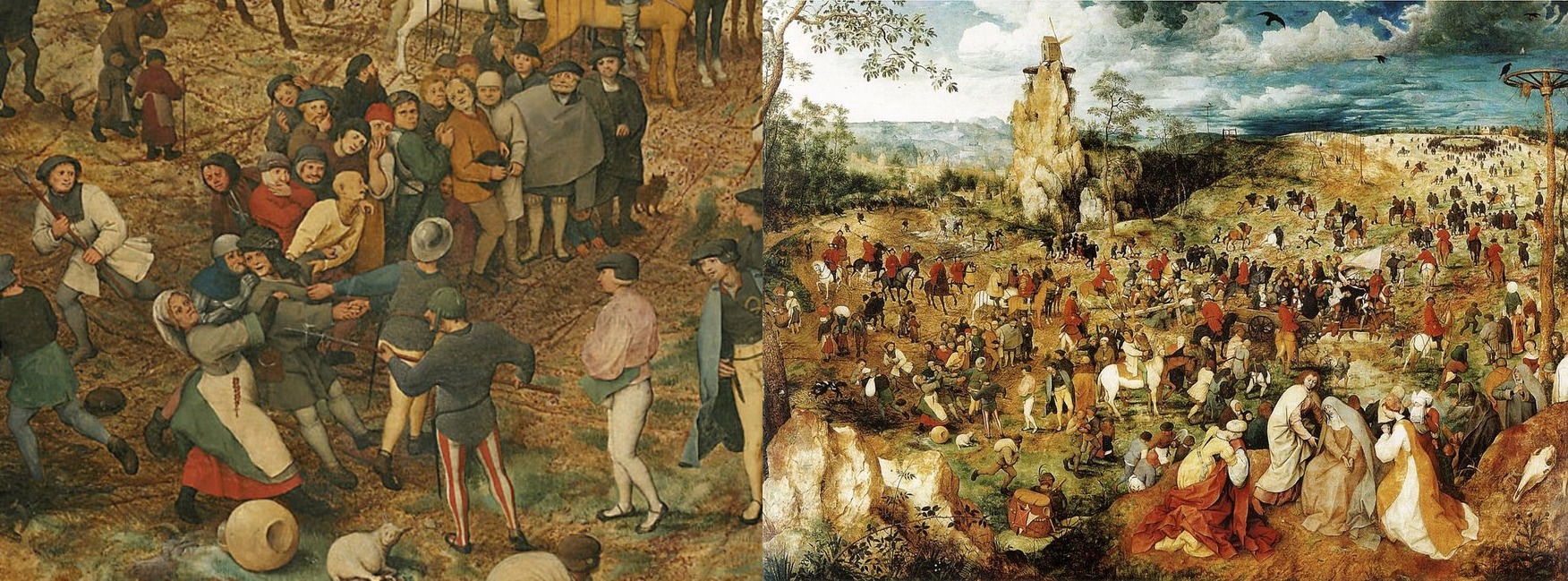
Crop out a detail and it transforms. A symbolic scene in an even larger image becomes just a portrait.